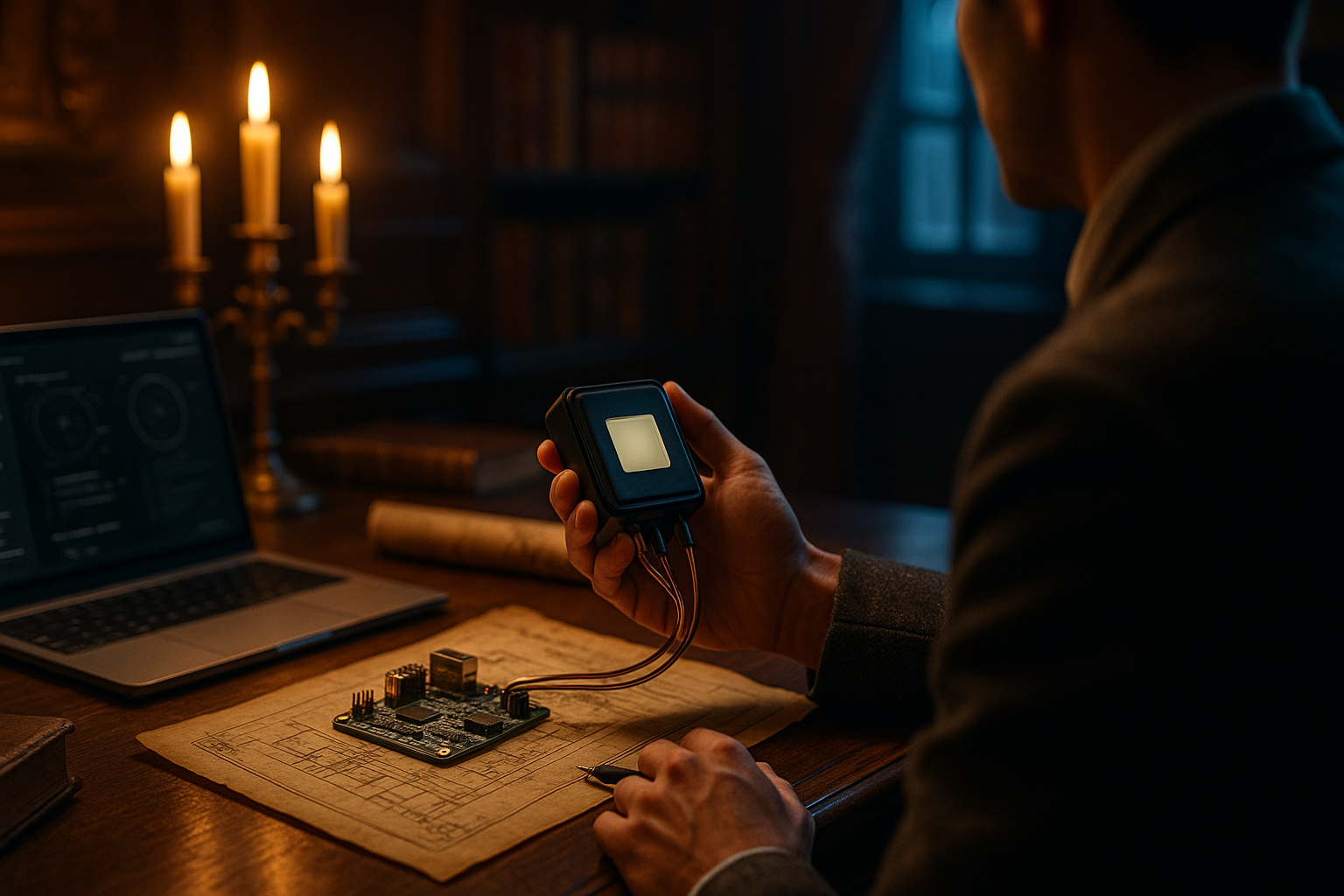
Founders ask one question again and again. What does it take to move from an idea on a napkin to a working proof of concept that customers can touch. The short answer is a sharp checklist that removes risk early, validates desirability, and sets you up for scale. This guide delivers that checklist for iot device prototyping for startups so you can plan with confidence, avoid rework, and get to pilot faster.
What is iot device prototyping for startups and why it matters
Iot device prototyping for startups is the process of transforming a concept into a functional hardware and software stack that can collect data, process it reliably, and deliver value to users in real environments. Done well, iot device prototyping for startups compresses learning cycles, exposes hidden risks, and clarifies the path to manufacturable product. Done poorly, it burns time and budget, and introduces technical debt that slows every future milestone.
The goal is not perfection. The goal is a focused build that proves the core value proposition, validates the data model, and reveals constraints that will affect later design for manufacture and certification steps.
The essential stages of iot device prototyping for startups
Use this stage based checklist to keep momentum predictable and to ensure you are investing in the right things at the right time during iot device prototyping for startups.
- Define the job to be done and success metrics
- Select sensing and actuation components
- Choose compute and power architecture
- Decide on connectivity and cloud approach
- Plan data model, edge processing, and AI opportunities
- Design for security from day zero
- Validate compliance and certification path
- Estimate cost and de risk supply chain
- Build, test, iterate, and prepare for pilot
Hardware choices that de risk iot device prototyping for startups
Hardware sets your ceiling and your constraints. Early choices can either accelerate learning or lock you into costly redesigns. Treat this as a decision tree guided by your product goals.
Sensing and actuation
- List the physical signals you must capture. Temperature, motion, location, vibration, air quality, or custom signals
- Evaluate sensor accuracy, drift, response time, and operating range against your use cases
- Prefer modules with evaluation boards for faster bench testing
- Check long term availability and second source options for every critical sensor
Compute and power architecture
- Decide between microcontroller and application processor based on required compute, memory, and operating system
- Assess peak and average current draw to size your power source and regulator design
- Design for power measurement early so you can profile real consumption in diverse scenarios
- Plan for programming and debug access, such as SWD or JTAG, in the first PCB spin
Prototype form factor
- Use modular dev kits for the first functional build to accelerate learning
- Move to a custom PCB only after you validate component choices and firmware maturity
- 3D print enclosures to test thermal behavior, ergonomics, mounting, and environmental exposure
Connectivity and cloud decisions for early prototypes
Connectivity choices influence battery life, bill of materials, latency, and your overall cloud architecture.
Network selection checklist
- Local only, such as BLE, Zigbee, or WiFi, for short range and low cost deployments
- Wide area such as LTE M, NB IoT, or classic cellular for mobile or remote assets
- LPWAN like LoRa for private networks and ultra low power constraints
- Match data volume, uplink and downlink frequency, and latency needs to the network
Cloud and edge patterns
- Start with a managed device gateway to speed up secure onboarding and telemetry ingestion
- Use edge filtering to reduce noisy or redundant data and save bandwidth
- Create a minimal digital twin schema for each device so you can track state, configs, and firmware version
Data and AI integration during prototyping
Your data strategy is your product strategy. Capture the right signals, annotate early, and design pathways for future intelligence. If your roadmap includes detection, prediction, or optimization, align your prototype pipeline now with our AI integration services so you can start collecting high quality training data from day one.
Data model and telemetry
- Define a compact, versioned telemetry schema so you can evolve without breaking clients
- Log raw samples for a subset of devices to support later model training and drift analysis
- Instrument firmware with lightweight metrics on sensor health, connectivity quality, and power
Edge analytics and AI readiness
- Identify features that can be computed at the edge to reduce payload size
- Tag events with ground truth labels during field tests to accelerate model development
- Prototype a simple rules engine first, then evaluate model based inference once you have sufficient data
If you need help structuring this pipeline for iot device prototyping for startups, you can also book a free consultation to review your approach and avoid common pitfalls.
Security by design checklist for connected devices
Security cannot be a bolt on step. Bake it in from your first prototype and align with credible guidance such as the NIST baseline for IoT devices. For a detailed reference, see NISTIR 8259A IoT Device Cybersecurity Core Device Capabilities.
- Establish a secure identity per device with unique credentials
- Protect data in transit with modern transport encryption and strong cipher suites
- Protect data at rest on the device with secure storage for keys and sensitive configs
- Enforce secure boot and signed firmware updates
- Limit attack surface with least privilege and disable unused services
- Add tamper detection for devices in hostile environments
- Plan incident response and update mechanisms before pilots
Compliance, certification, and radio testing roadmap
Regulatory work is as much a project management task as a technical one. Start early by determining what applies to your device class and target markets. Radio devices for United States markets generally require authorization. Review official guidance at the FCC Equipment Authorization site to plan timelines and lab requirements.
- Identify applicable directives and standards by geography such as FCC, ISED, CE, UKCA, and safety standards for power or environmental exposure
- Prefer pre certified radio modules in early spins to accelerate time to pilot
- Plan for conducted and radiated tests as part of design verification
- Maintain a compliance matrix mapping each requirement to tests and evidence
Cost and supply chain planning while you build
Your bill of materials, assembly approach, and test strategy define your unit economics. Address these in parallel with the functional build.
- Build a target cost model that includes components, assembly, testing, and logistics
- Confirm availability and lead times for long pole components
- Qualify alternates for critical parts to reduce risk
- Design for test points and jig friendly interfaces to reduce production test time
- Run an early environmental stress and reliability test plan to reveal weak links
Pilot, field trials, and success metrics
Pilots are experiments with clear hypotheses. Treat them with scientific discipline so you actually learn and can make go or no go decisions with data.
- Define pilot objectives such as accuracy, uptime, user engagement, or cost to serve
- Pre register devices with unique labels for tracking and support
- Instrument real time dashboards for health and usage
- Capture structured feedback from pilot users and operators
- Schedule firmware update windows and fallbacks to de risk bricking
- Close with a postmortem that maps findings to design actions
Why partner with Prototype Toronto for iot device prototyping for startups
As part of Veebar Tech Inc in Toronto, our team blends hardware, embedded, cloud, and AI expertise under one roof. That means fewer handoffs and faster iteration. We help non tech companies add a technical partner to their digital growth plan, from concept through pilot and into scalable production. Learn more about our approach on the Prototype Toronto site.
- Rapid proof of concept with modular platforms to validate early
- Custom PCB and enclosure design once requirements stabilize
- Secure device onboarding, data pipelines, and dashboards
- AI opportunities mapped to your data and operational realities
- Compliance planning and lab coordination
- Manufacturing readiness with design for test and documentation
Common pitfalls and how to avoid them
- Unclear success metrics. Define what must be proven in each build
- Overbuilding. Resist adding nice to have features before the core is validated
- Ignoring security until late. It will cost more and may force redesigns
- Skipping power profiling. Real world duty cycles rarely match lab assumptions
- Cloud sprawl. Choose a minimal viable architecture, then scale by need
Practical conclusion and next steps for iot device prototyping for startups
Iot device prototyping for startups is a learning engine. When you break the work into the stages above and hold yourself to crisp acceptance criteria, you derisk the journey and protect your runway. Begin with a sharp definition of value, select components that match your physics and data needs, validate connectivity with realistic traffic, and instrument everything for observability. Bake in security, align early with certification requirements, and keep a running view of cost and supply chain. Most important, treat each pilot as a structured experiment so decisions are grounded in evidence, not hope.
If you want a partner that can help you turn this checklist into a working device and a credible pilot, we are here to help. Our team brings integrated expertise across hardware, embedded software, cloud, and AI, and we have the tooling and processes to move fast without breaking quality. Whether you are at concept or already iterating, we can accelerate your path. Iot device prototyping for startups does not have to be chaotic. With the right plan and the right people, it is predictable and repeatable.
Ready to move from idea to pilot. Talk to our team today.