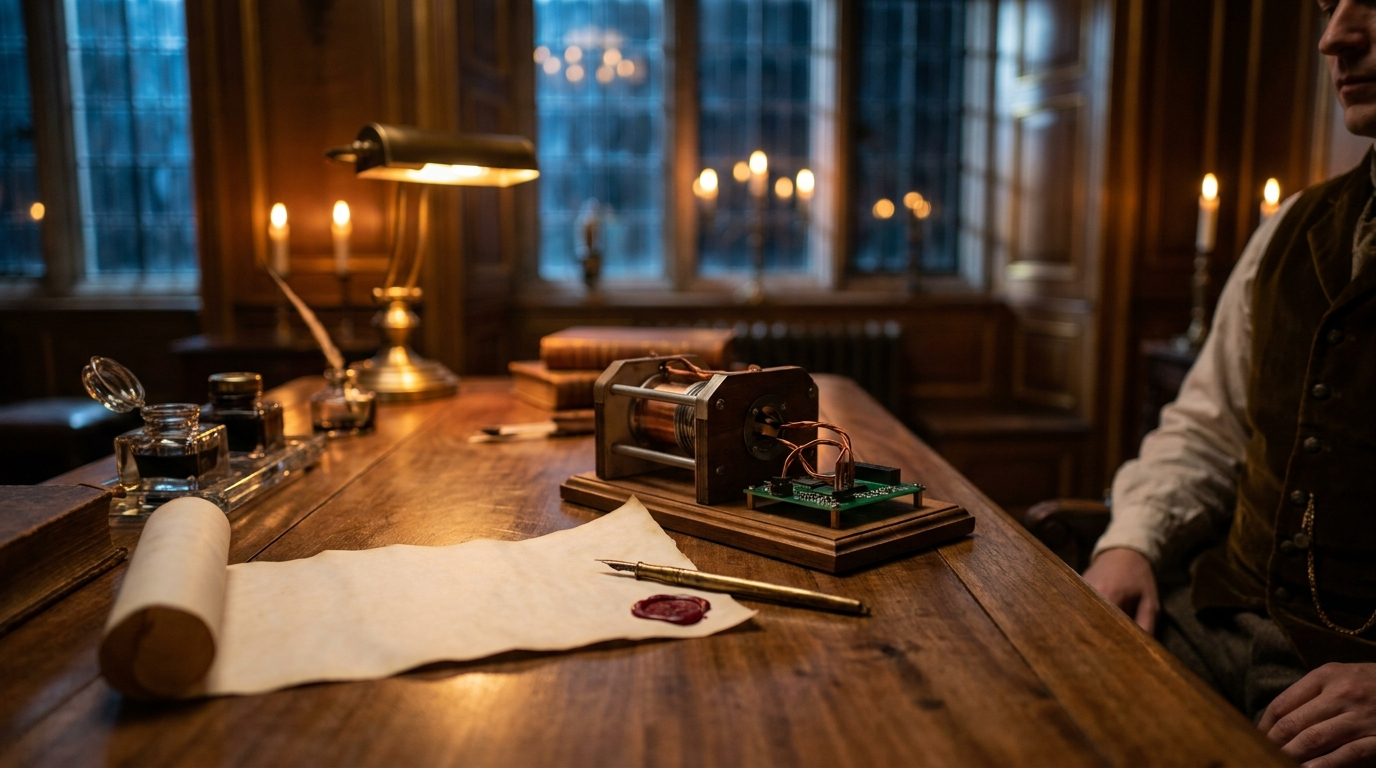
If nobody put in writing who owns IP in prototype development before the first line of code was written, the default legal answer is probably not the one you expect: in Canada, the person or company that actually creates a work is its first owner of copyright, and a patent belongs to the named inventor. Your agency owns the code. The freelance engineer owns the mechanism they designed. You own the invoice.
That default is fixable with one well-drafted paragraph in a development agreement. It is expensive and sometimes impossible to fix eighteen months later, when an acquirer’s lawyer asks for a clean chain of title and you cannot produce one. This guide explains the rules in plain language, shows the four separate layers of ownership hiding inside a single prototype, and gives you the exact contract language and cost ranges to expect.
The short answer on who owns IP in prototype development
You own it only if your contract says you own it, in writing, signed. Nothing about paying for the work transfers ownership by itself. The question of who owns IP in prototype development is answered by two statutes and one contract, in that order.
Under the Canadian Copyright Act, the author of a work is the first owner of copyright. There is a narrow exception for employees who create work in the course of their employment, where the employer owns it. An external development firm, a contractor, or a friend building your app on weekends is not your employee, so that exception does not apply. The Act also requires an assignment of copyright to be in writing and signed by the owner. A verbal agreement, a Slack thread, or a statement of work that says “deliverables” without saying “assigns” does not meet that bar.
Patents work differently again. Filing rights start with the human inventor, not with whoever funded the project. If a contract engineer invents the linkage that makes your device work, they are the inventor and their rights need to be assigned to your company before you file with the Canadian Intellectual Property Office. American companies often assume the United States “work made for hire” doctrine covers them, and it usually does not: software written by a contractor rarely falls inside the statutory categories, so the contractor still owns it absent a written assignment.
The four layers of ownership inside one prototype
A prototype is not a single asset, it is a stack of separately owned things, and a contract clause that covers one layer can leave the others exposed. Here is how the layers usually break down.
| Layer of the prototype | Default owner with no contract clause | What your agreement must say |
|---|---|---|
| Source code, firmware, scripts | The developer or development firm | Present assignment of all copyright, plus waiver of moral rights |
| CAD models, PCB layouts, schematics, mould drawings | The engineer or design house that drew them | Assignment plus delivery of native editable files, not just PDFs or STEP exports |
| Inventions, methods, novel mechanisms | The named human inventor | Inventor assignment signed by each individual, with a duty to cooperate on filings |
| Brand assets, interface design, written copy | The designer or writer | Assignment covering logos, icons, and screens, plus confirmation of font and stock licences |
| Third-party and open-source components | The upstream project, under its licence | A component list with licences named, and a ban on copyleft in shipped code without approval |
| Data, prompts, fine-tuned models | Contested, and often the platform’s terms decide | Explicit ownership of training data, model weights, prompts, and evaluation sets |
Contract clauses that settle who owns IP in prototype development
Four clauses do almost all of the work, and you can check for them yourself in about ten minutes. When a client asks us who owns IP in prototype development on their existing agreement, this is the list we read against it.
Assignment language that actually transfers ownership
Look for the words “hereby assigns” in the present tense. A promise to assign later is a contractual obligation, not a transfer, and it becomes worthless if the supplier dissolves, is bought, or simply stops answering email. Add a waiver of moral rights, which in Canada are personal to the author and survive an assignment, so an author could otherwise object to how you modify their work. Ask that every individual who touched the project, including subcontractors, signed a back-to-back assignment with the firm you hired. This is where most chains of title break.
Background IP versus foreground IP
No competent development partner will hand you their internal libraries, boilerplate, and reusable tooling, because they use those on every project. That is background IP, and it should stay theirs. What you buy is the foreground IP, everything created for your project. The fair structure is simple: you own the foreground outright, and you receive a perpetual, irrevocable, worldwide, royalty-free licence to any background IP embedded in your deliverables. Without that licence, you own a car with a rented engine.
Who owns IP in prototype development when a project stops halfway
Roughly one in five prototype engagements ends early, because funding shifts, the market answer arrives sooner than expected, or a technical assumption fails. Payment-gated assignment is normal and reasonable: ownership vests as invoices are paid. What you want to avoid is all-or-nothing vesting on final delivery, which leaves you with nothing after paying for eleven of twelve weeks. Negotiate assignment that vests per milestone, and a termination clause that requires the supplier to hand over the repository, design files, credentials, and documentation within a fixed window, typically ten business days.
Confidentiality and the know-how you cannot assign
Trade secrets are protected by contract and behaviour, not by registration. If your advantage is a process, a supplier relationship, or a set of calibration values, the NDA and the confidentiality clause matter more than the copyright assignment. Keep the survival period long, five years at minimum and indefinite for genuine trade secrets, and make sure it binds subcontractors too.
Open-source components and the licence you did not read
Every modern prototype contains third-party code, and that is fine as long as the licences are compatible with your plans. The distinction that matters is permissive versus copyleft. Permissive licences such as MIT, BSD, and Apache 2.0, catalogued by the Open Source Initiative, let you ship commercial products with attribution. Copyleft licences such as GPL and especially AGPL can require you to publish your own source code when you distribute or, for AGPL, when you offer the software over a network. A founder who discovers an AGPL dependency during due diligence is looking at a rewrite, not a conversation.
Ask your development partner for a software bill of materials, a plain list of every dependency and its licence. Tools generate this automatically in minutes. Getting it at each milestone costs nothing and settles who owns IP in prototype development at the component level, which is the layer that trips up otherwise careful contracts.
AI-written code changes who owns IP in prototype development
Code generated by an AI assistant sits in a genuinely unsettled area, and you should plan for the uncertainty rather than hope it away. Copyright protection generally requires a human author who exercised skill and judgment, which is why the United States Copyright Office has declined to register purely machine-generated material. Practically, that means output your team merely accepted may be harder to defend as exclusively yours than output a human engineer designed, reviewed, and reworked.
Three provisions handle this. Require disclosure of which AI tools were used and under which enterprise terms, since consumer tiers sometimes claim broader rights to inputs and outputs. Require that a named human engineer reviews and modifies generated code, which both protects the ownership position and catches the confident-but-wrong output these tools still produce. And require that your proprietary data and prompts were never submitted to a service that trains on customer inputs. We build these three checks into every engagement that touches our AI integration services, because a model trained on a client’s operational data is often the most valuable asset in the whole project and the easiest to leak away through default platform terms.
Hardware adds a layer most software contracts miss
Deep-tech and physical products carry ownership questions that a web contract never contemplates. Firmware is copyright, the mechanism may be patentable, the appearance can be registered as an industrial design, and the tooling is a physical asset owned by whoever paid for it, which is frequently the contract manufacturer rather than you. Injection mould tooling alone runs from about $8,000 for a simple single-cavity tool to well past $60,000 for a multi-cavity production mould, so the question of who owns IP in prototype development quietly becomes a question of who owns a steel object sitting in a factory in another country.
Name the tooling explicitly in the contract, along with test fixtures, jigs, and calibration data. Also watch your patent clock: in Canada and most jurisdictions, publicly disclosing your invention starts a twelve-month grace period, and in many countries any public disclosure before filing destroys novelty outright. Demo days, crowdfunding pages, and trade shows all count as disclosure. File first, then show.
Realistic timelines and costs
Getting ownership right is cheap relative to the build. Expect these ranges for a first prototype and its legal scaffolding.
- Software or web MVP: six to twelve weeks, roughly $20,000 to $70,000 depending on integrations and how much of the workflow is genuinely new. Our web and app development engagements usually sit in this band.
- Deep-tech or hardware proof of concept: three to six months, roughly $45,000 to $180,000, with tooling and certification on top if you move toward production.
- IP lawyer reviewing a development agreement: $1,500 to $4,000, usually a one-week turnaround. This is the single highest-return legal spend a first-time founder makes.
- Patent application drafted by a registered agent: $6,000 to $14,000 per application, plus government fees in the low hundreds. Budget twelve to thirty-six months to grant.
- Retroactive chain-of-title cleanup: $5,000 to $25,000 and two to four months of chasing signatures from people who have moved on, assuming they all sign. Some will not.
A checklist to run before you sign
- Does the agreement say “hereby assigns” in the present tense, covering copyright, design rights, and inventions?
- Are moral rights waived, and did every individual contributor sign an assignment to the firm you are hiring?
- Is background IP defined, and do you get a perpetual royalty-free licence to whatever is embedded in your deliverables?
- Does ownership vest per paid milestone rather than on final delivery only?
- Will you receive a component list with licences named, and are copyleft dependencies excluded without written approval?
- Are AI tool usage, prompt ownership, and data handling addressed explicitly?
- For hardware, is tooling ownership named, and do you get native editable design files?
- On termination, is there a fixed handover window for code, files, credentials, and documentation?
How we handle who owns IP in prototype development
Our position is unambiguous: the client owns everything we create for them, assigned in the present tense at each paid milestone, with a permanent licence to any of our internal libraries that end up in the build. We deliver into your repository and your cloud accounts from day one, not ours, so that ownership is a fact about where the work lives rather than a promise about a future handover. Every engagement ships with a component and licence list, and hardware projects name the tooling owner before the first quote goes out.
That approach runs across all three of our service lines, whether you are commissioning product engineering and prototyping for a physical device, adding AI to an existing operation, or digitalising the manual processes your business currently runs on spreadsheets. If you want to see how Prototype Toronto structures a build, the fastest route is to send us the agreement you have been offered or the project you are scoping, and we will tell you where the ownership gaps sit before you commit budget to anything.
The decision in front of you is not complicated. Read the assignment clause, confirm it is present tense and signed by everyone who will touch the work, get the licence list, and settle tooling and AI terms in writing. Do that in the week before the project starts, not in the quarter before a funding round. If you would rather have an engineer walk through it with you and price the build properly, book a free consultation and bring whatever documents you already have.
Frequently Asked Questions
Who owns IP in prototype development when an outside firm does the work?
In Canada, the people who create the work own it by default, so an outside firm can hold the copyright in code and drawings unless your contract says otherwise. Employees are the exception, since their employer owns what they produce at work. A written assignment in the development agreement is what moves ownership to you.
What should the contract say so the finished prototype belongs to my company?
Look for three things: an assignment of all IP created for the project, a waiver of moral rights (Canadian law lets creators waive them but not assign them), and delivery of source files rather than just a compiled build. Add a clause that assignment takes effect on payment, and state who owns any data used to train models.
Can the development firm keep rights to parts of the prototype?
Usually yes, and that is normal. Most firms reuse their own libraries, internal frameworks and boilerplate across clients, so they keep that background IP and grant you a broad licence to use it inside your product. What matters is that everything built specifically for you, the foreground IP, transfers outright. Ask for the reused components to be listed.
What happens to patent rights if the firm's engineers invent something?
Copyright and patents are separate. In Canada the inventor owns the patent rights unless there is a signed assignment, so a firm's engineer can be named inventor on something built for you. Your agreement should require the team to assign patent rights and to sign the paperwork the patent office needs later, including after the project ends.
We already started the build without an IP clause. Can we still fix it?
Yes, though it is harder once the work is underway. Ask for a signed assignment covering everything delivered so far, usually a short amendment tied to the next milestone payment. Having a lawyer draft that language is a small cost against a build budget. Agreeing who owns IP in prototype development before kickoff avoids the conversation entirely.